“It began as a mistake.” By middle age, Henry Chinaski has lost more than twelve years of his life to the U.S. Postal Service. In a world where his three true, bitter pleasures are women, booze, and racetrack betting, he somehow drags his...
A mathematics professor by training, Alberto Vanasco (1925–1993) was born in Buenos Aires and published his first novel, Nonetheless, Juan Lived (Sin embargo, Juan vivía) in 1947. His second effort, The Many Who Do Not Live (Los muchos que no...
The series started in 2009 with Post-Human, followed by it’s sequel, 2011’s Trans-Human, and then leading to the prequel, published in the summer of 2012, Sub-Human. The trilogy can be read in the order of publication or in the chronological...
While Impressionism marked the first steps toward modern painting by revolutionising an artistic medium stifled by academic conventions, Post-Impressionism, even more revolutionary, completely liberated colour and opened it to new, unknown horizons....
A dying city, cut off from the rest of civilization. A midnight visit by three people to a deserted graveyard from which only two will return. A young woman who haunts the nightclubs of the city in an endless search to find the man who ruined her...
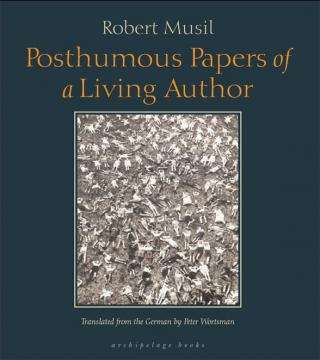
Posthumous Papers of a Living Author (1936) collects together short prose and fiction, almost all written between 1920 and 1929, under the headings 'Pictures', 'Ill-tempered Observations' and 'UnStorylike Stories'. It is Musil's most accessible...
Consider the poor mailman of the future. To “sleet and snow and dead of night”—things that must not keep him from his appointed rounds—will be added, sub-zero void, meteors, and planets that won’t stay put. Maybe he’ll decide that for...
Tony Judt’s Postwar makes one lament the overuse of the word “groundbreaking.” It is an unprecedented accomplishment: the first truly European history of contemporary Europe, from Lisbon to Leningrad, based on research in six languages,...