They say that history is written by the victors. But what if history—or what we come to know as history—has all along been written by the wrong people? What if everything we’ve been told is only part of the story? What if...
In the fierce winter of 1710, in a North American port, a boat ferried ten shipwreck survivors to the safety of shore. Fourteen Englishmen had taken refuge on Boon Island, a sparse 100-yard long stretch of rock, without food or adequate shelter,...
Elly Park was a beautiful, golden-haired little girl who moved with unusual grape. As a baby she had been undemanding, and later she appeared totally absorbed in her own world. When she was three her parents learned that she was autistic.
In...
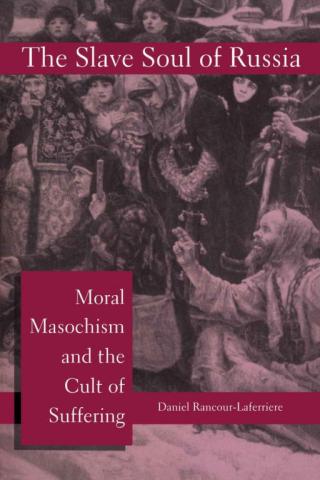
Why, asks Daniel Rancour-Laferriere in this controversial book, has Russia been a country of suffering? Russian history, religion, folklore, and literature are rife with suffering. The plight of Anna Karenina, the submissiveness of serfs in the 16th...
The single document that best illustrated American anti-communism and general suspicion of Soviet aspirations, was George Kennan’s famous Long Telegram of 1946. The Long Telegram was perhaps the most cited and most influential statement of the...
A leading historian draws guides us through the inner workings of Soviet power.
The USSR may no longer exist, but its history remains highly relevant—perhaps today more so than ever. Yet it is a history which for a long time proved impossible...


![The short grammar of Lidepla [International language]](https://www.rulit.me/kotha/images/nocover.jpg)

![The Sources of Soviet Conduct [a.k.a. X Article]](https://www.rulit.me/data/programs/images/the-sources-of-soviet-conduct-a-k-a-x-article_354882.jpg)