Аннотация
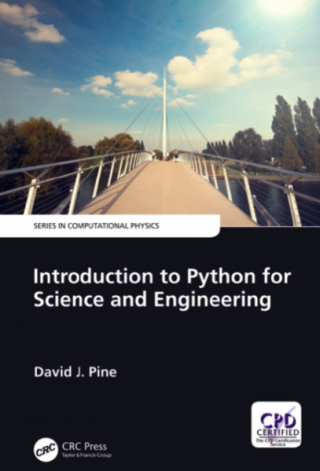
The aim of this book is to provide science and engineering students a practical introduction to technical programming in Python. It grew out of notes I developed for various undergraduate physics courses I taught at NYU. While it has evolved considerably since I f i rst put pen to paper, it retains its original purpose: to get students with no previ-ous programming experience writing and running Python programs for scientif i c applications with a minimum of fuss.
The approach is pedagogical and “bottom up,” which means start-ing with examples and extracting more general principles from that experience. This is in contrast to presenting the general principles f i rst and then examples of how those general principles work. In my experience, the latter approach is satisfying only to the instructor.
Much computer documentation takes a top-down approach, which is one of the reasons it’s frequently dif f i cult to read and understand.
On the other hand, once examples have been seen, it’s useful to ex-tract the general ideas in order to develop the conceptual framework needed for further applications.
In writing this text, I assume that the reader:
• has never programmed before;
• is not familiar with programming environments;
• is familiar with how to get around a Mac or PC at a very basic level;
and • is competent in basic algebra, and for Chapters 8 and 9, calculus, linear algebra, ordinary dif f erential equations, and Fourier analy-sis. The other chapters, including 10–12, require only basic algebra skills.



Комментарии к книге "Introduction to Python for Science and Engineering"