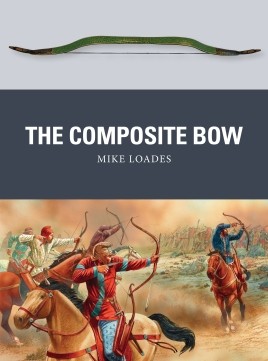
An ancient design, emerging from Central Asia in the second millennium BC, the composite bow was adopted by a staggering variety of cultures, from nomadic tribal peoples such as the Huns, Turks and Mongols, to mighty empires such as the Romans,...
On the eve of World War I, the art of submarine warfare was barely a dozen years old; no nation had submarine-qualified officers serving at the senior staff level and no nation had developed any method for detecting submarines, or attacking them if...
A lavishly illustrated compendium of military hardware covers everything that fought in the air, on the ground, and on the seas during World War II. There are more than 500 separate items of equipment used between 1939 and 1945, from combat handguns...
Jagdgeschwader 26 was one of only two German units to remain on the Western front for the entire war. Its rise and fall mirrors the history of the German Air Force. This book gives a chronology of the unit's activities, using documentary sources,...
Between May 1944 and May 1945, the Luftwaffe declined from a resilient force, eagerly waiting to use new aircraft and weaponry, to a destroyed air arm. This study focuses on this period, showing how close the German air force was to...
The Lee-Enfield is one of the 20th century's most recognisable and longest-serving military rifles. It was adopted by the British Army in 1895 and only replaced by the L1A1 SLR in 1957. It saw combat from the Boer War onwards, and thousands are...
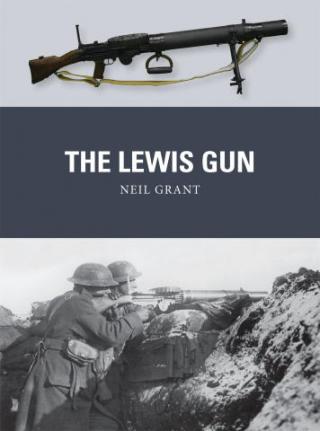
During World War I, the British adopted the US-designed Lewis gun as an infantry weapon, realizing that its light weight and the fact that it could be fired both prone and on the move made it ideal for supporting advances and defending captured...
An iconic medieval missile weapon, the deadly longbow made possible the English victories at Crecy and Poitiers at the height of the Hundred Years' War. The longbow was the weapon at the heart of the English military ascendancy in the century after...
Patented in 1898 and produced from 1900, Georg Luger's iconic semi-automatic pistol became synonymous with Germany's armed forces throughout both world wars.
Initially chambered for the 7.65×21mm round, from 1902 the Luger was designed for DWM's...
In 1938 the US Chief of Infantry requested that the Ordnance Department develop a carbine to be used by service and support troops, artillerymen, machine-gun crews, tankers, mortar crews and other troops not needing the power of the M1 Garand rifle....