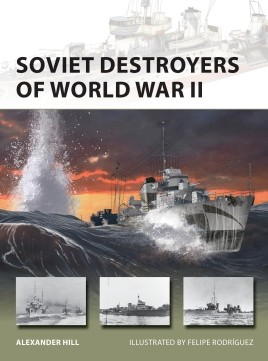
The Soviet Navy that faced the German onslaught in 1941 boasted a mixture of modern warships, often built with foreign technical assistance, and antiquated warships from the Tsarist era that were modernised for the conflict.
Some Soviet naval...
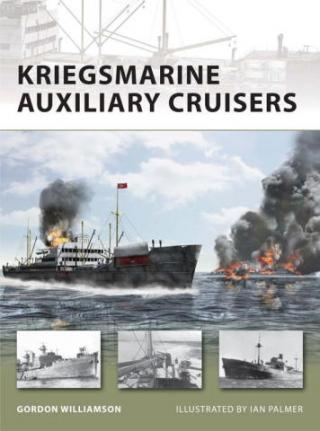
Despite being relatively unknown compared to famous ships like Graf Spee or Bismarke, or the more famous U-boats, the Auxiliary Cruisers were immensely successful, not only in the number of enemy ships they sank, but in the resources which were tied...
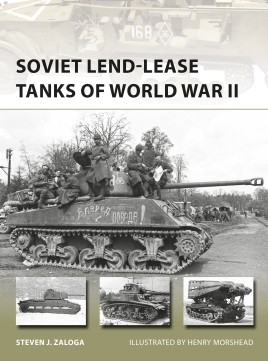
The Red Army suffered such catastrophic losses of armour in the summer of 1941 that they begged Britain and the United States to send tanks. The first batches arrived in late 1941, just in time to take part in the defence of Moscow. The supplies of...
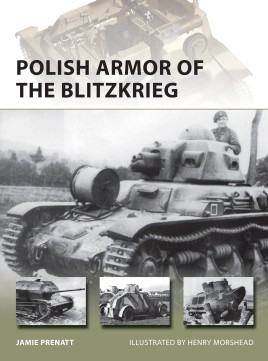
The Polish army during the Blitzkrieg conjures up tragic images of infantry and dashing, but ineffective and ultimately doomed cavalry charges. In actuality the Poles, in the midst of a large-scale re-armament programme, had up to 600 armoured...
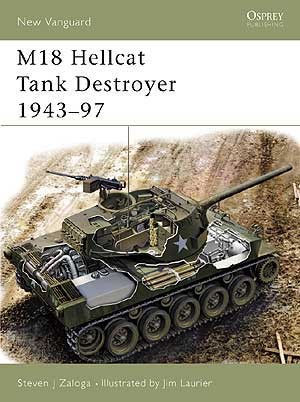
The M18 76mm Gun Motor Carriage was developed for the US Army's Tank Destroyer Command. It was the only tank destroyer deployed during World War II actually based on their requirements for speed and firepower. This book examines the development of...
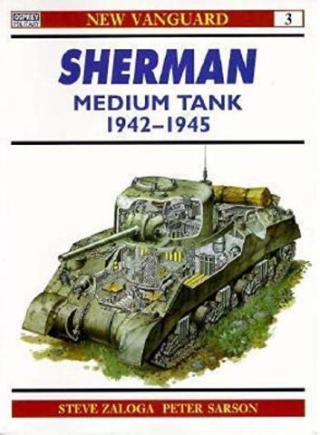
The M4 Sherman tank was the mainstay of the Western allies between 1942 and 1945. Fast and modern it was better than most of the tanks Britain had to offer. The American Chief of Staff claimed in November 1943 that it had been hailed widely as 'the...
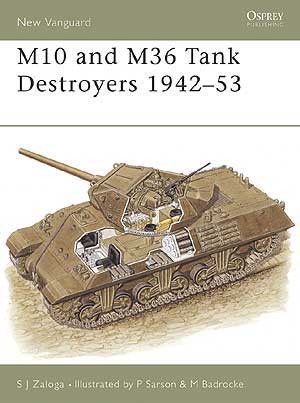
The US Army had a unique tactical doctrine during World War II, placing the emphasis for tank fighting on its Tank Destroyer Command whose main early-war vehicle was the M10 3-inch Gun Motor Carriage, based on the reliable M4A2 Sherman tank chassis....
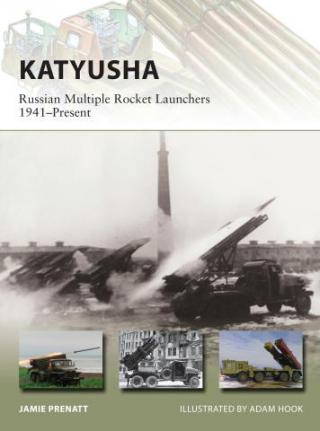
Although military rockets have been used since the Middle Ages, it was not until the Soviet Union pioneered the concept of Multiple Rocket Launchers (MRLs) in the late 1930s that they emerged as a decisive weapon. In the modern era, these...
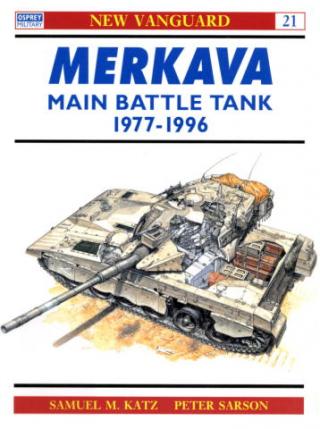
The Merkava, or Chariot, was the first tank entirely designed and built by the Israeli Army. The IDF had previously been using a variety of vehicles, acquired from various sources, including in particular the Sherman and Centurion. The Merkava was...
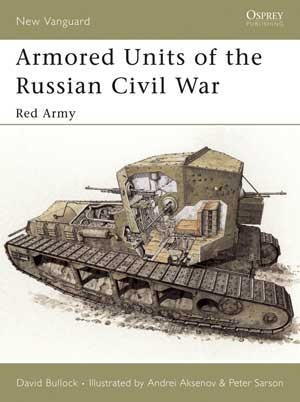
By 1920 the Red Army of Russia fielded an overwhelming array of armored cars, armored trains and tank detachments. These armored units played an important part in consolidating the newly won Bolshevik empire in the early 1920s; as a consequence of...