"A worthy addition to the Feynman shelf and a welcome follow-up to the standard-bearer, James Gleick's Genius." ―Kirkus Reviews
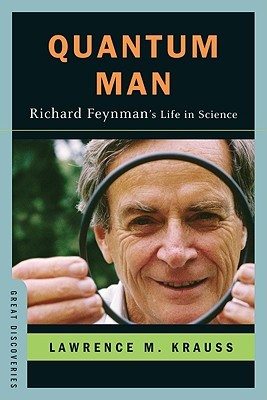
Perhaps the greatest physicist of the second half of the twentieth century, Richard Feynman changed the way we think...
“Assume the cow is a sphere.” So begins this lively, irreverent, and informative look at everything from the physics of boiling water to cutting-edge research at the observable limits of the universe. Rich with anecdotes and accessible examples,...
By the star physicist and author of multiple #1 Sunday Times bestsellers, a major and definitive narrative work on black holes and how they can help us understand the universe. At the heart of our galaxy lies a monster so deadly it can bend space,...
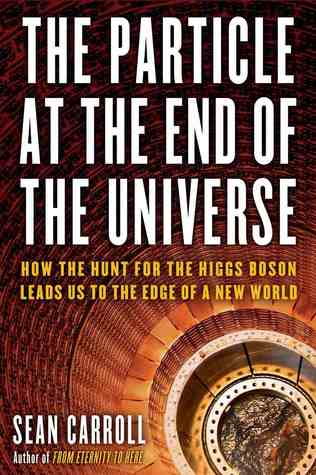
It was the universe’s most elusive particle, the linchpin for everything scientists dreamed up to explain how physics works. It had to be found. But projects as big as CERN’s Large Hadron Collider don’t happen without incredible...
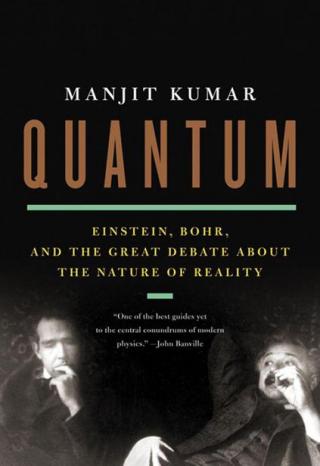
For most people, quantum theory is a byword for mysterious, impenetrable science. And yet for many years it was equally baffling for scientists themselves. Manjit Kumar gives a dramatic and superbly-written history of this fundamental scientific...
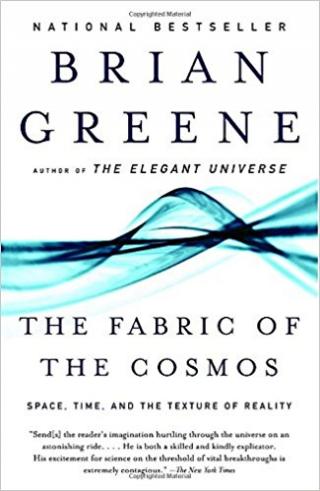
From Brian Greene, one of the world’s leading physicists and author the Pulitzer Prize finalist The Elegant Universe, comes a grand tour of the universe that makes us look at reality in a completely different way.
Space and time form the very...
Paradoxical portraits of seven neurological patients, including a surgeon consumed by the compulsive tics of Tourette's syndrome unless he is operating; an artist who loses all sense of color in a car accident, but finds new creative power in black...
How did humanity originate and why does a species like ours exist on this planet? Do we have a special place, even a destiny in the universe? Where are we going, and perhaps, the most difficult question of all, "Why?"
In The Meaning of Human...
For centuries scientists believed that the universe was a vast machine – with enough detail, you could predict exactly what would happen. Admittedly real life wasn’t like that. But only, they argued, because we didn’t have enough data to be...